Money and budget: baht, cash, cards and what goes into the price of a tour
In Thailand you pay in baht, and with tours it's worth watching more than just the lowest price. We explain when cash comes in handy, why the park fee isn't always included in the price and how to compare offers priced per person and per group.
In Thailand you pay in Thai baht (THB). You can use a card for bookings and in larger venues, but cash comes in handy, for example for park fees that are paid on the spot on some tours. When comparing tours, don't look only at the lowest price. Check exactly what the chosen option includes and whether the price is per person or for the whole group.
Currency and exchange rate
The Thai currency is the baht (THB). The exchange rate against the euro changes every day, so we don't give a fixed conversion here. Check the current rate before you travel, at your bank or in your card app.
When withdrawing from an ATM or paying by card, watch for two things:
- Fees. Before you confirm, the ATM shows any fee charged by the local bank. Ask your own bank in advance how much it charges for withdrawals abroad.
- Conversion to euros. If a terminal or ATM offers to charge you in euros instead of baht, look at the exchange rate used and compare it with your bank's rate. Only then decide.
An immigration officer may ask you to show sufficient funds for your stay when you enter the country. You'll find more about this in the guide Visas and entry.
Cash or card?
Plan for both. The tours you choose through us are booked and paid for online with a partner. On the spot, though, smaller payments come up where cash is handy: markets, small snacks, a taxi to the meeting point or fees that aren't included in the tour price.
A good example is the park fee. On some island tours it's part of the price, while elsewhere the operator explicitly collects it in cash on the day of the tour. For the early Phi Phi tour from Krabi, the listing states this directly in the terms. So before you go, read whether you've already paid the fee or need to keep some baht for it.
What goes into the price of a tour
Two tours with a similar name can cost different amounts because they include different services. When comparing, check:
- Option. One product can have several versions, for example with and without transfer, with and without dinner, or with a longer route. The price applies to the chosen option, not to the whole product.
- Hotel pickup. It's usually included only for specified zones. More distant areas may carry a surcharge, or you make your own way to the meeting point. For example, with a car with a driver in Phuket, pickup at the airport or at the pier for tour boats is charged extra.
- Park fees. Marine national parks charge an entrance fee. In some cases it's included in the price, in others it's paid separately. For the Similan tour, the operator points out that the park fee is non-refundable.
- Food and drinks. Lunch on the boat, dinner at a show or tastings in the price affect whether you'll still pay for anything on the spot.
- Equipment and extras. Snorkelling gear, a kayak, front-row seats at a theatre or a specific sun lounger at a beach club are usually a separate category.
- Cancellation. Cancellation terms aren't the same for all offers. Some allow free cancellation shortly before the date, others require longer notice. Check them for the specific option.
Per person or per group?
For shared tours the price is usually per person, with separate prices for children depending on age. Private services are often charged differently. A private longtail boat from Ao Nang, a private transfer from Phuket to Krabi or an airport transfer in Krabi are sold per group or per vehicle, with a limit on people and luggage.
That's why, for two to four people, a private option can work out differently than you'd expect from the price for one person. Always compare the same number of people and the same content of the service.
How to put together a budget without surprises
- Split your costs into fixed and variable. Fixed costs are flights, accommodation and tours booked in advance. Variable costs are food, local transport, fees on the spot and small purchases.
- Don't put every boat tour you find into your plan. Phi Phi, Hong and four islands are similar in some ways. One or two well-chosen island days will save you money and energy.
- Allow a buffer for weather changes. If a tour is rescheduled, it can mean an extra night or different transport.
- Tips are explicitly stated by several offers as not included and voluntary. It's up to you whether and how much to give.
- For GetYourGuide offers, we show an indicative starting price in US dollars. Next to the price you'll see whether it's per person or per group. You'll confirm the final amount for your date, number of travellers and chosen option on GetYourGuide before booking.
Three types of budget
- More economical: one base, shared tours, fewer transfers, food at markets and in smaller places.
- Mid-range: two bases, a combination of shared tours and one private day, airport transfers.
- More comfortable: a private boat or a car with a driver, more free days and fewer early starts.
We don't promise specific figures, because accommodation and tour prices change with the season and the date. December and January are among the busiest periods, so book ahead.
You'll find how to divide your days between areas so transfers don't cost you too much time and money in the guide Transport and transfers.
More topics in the guide
Weather in Phuket, Krabi and Phang Nga: when to go
Phuket, Krabi and Phang Nga lie on the Andaman Sea, so the weather of the west coast is what matters. See which months tend to be drier, when the monsoon arrives and…
GuideVisas and entry to Thailand: what to check before you arrive
You can travel to Thailand as a tourist with a Slovak passport without a visa, but from 15 September 2026 for a maximum of 30 days. See what applies to your passport, the TDAC arrival card and longer stays, and where to…
Transport and transfers: airports, travel between areas and boats
Phuket airport and Krabi airport are two different airports, and you can't reach Railay or Phi Phi by car all the way to your hotel. This overview shows how to get from…
GuideWhere to stay: Phuket, Ao Nang, Railay or Khao Lak
Where you stay affects which tours are nearby, whether hotel pickup is available and how long you’ll spend in the car. We compare parts of Phuket, Krabi and Phang Nga and advise when one base is enough and when two are…
GuideBefore you travel to Thailand: documents, health, electricity, etiquette and emergency numbers
A short list of things to sort out before you fly to Phuket or Krabi: documents, insurance, an adapter, clothes for temples, behaviour in national parks and numbers to save on your phone.
Photos and sources
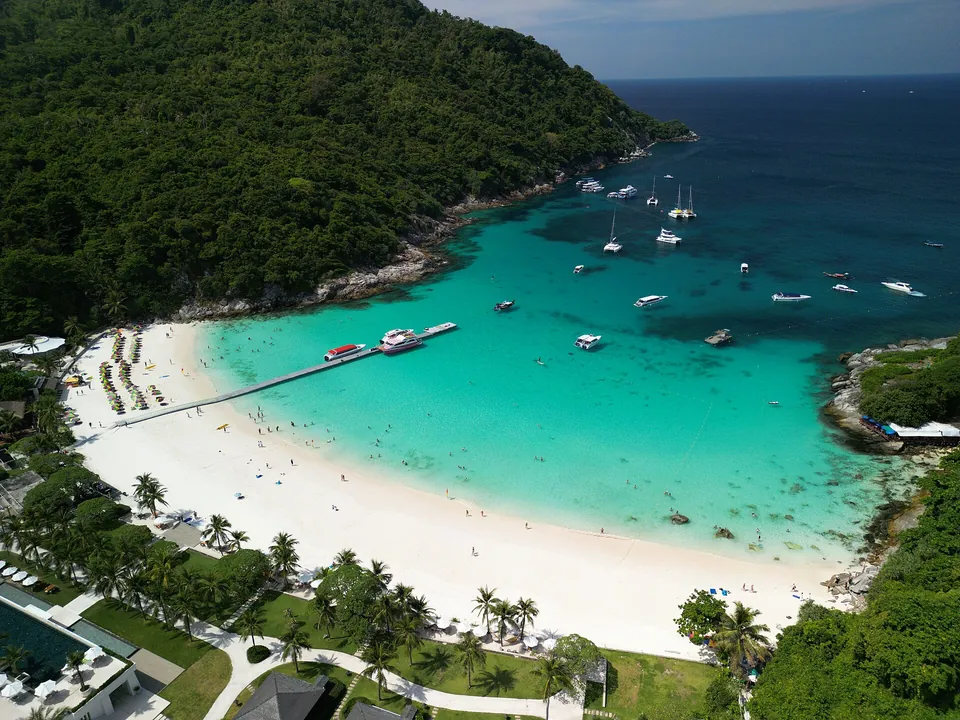
- A white beach and turquoise bay with anchored boats on Racha Yai. Photo: ELPHUKET, CC BY-SA 4.0, source: Wikimedia Commons. Edited: resized, saved as WebP, cropped for the page. The edited photo is under the same licence, CC BY-SA 4.0.
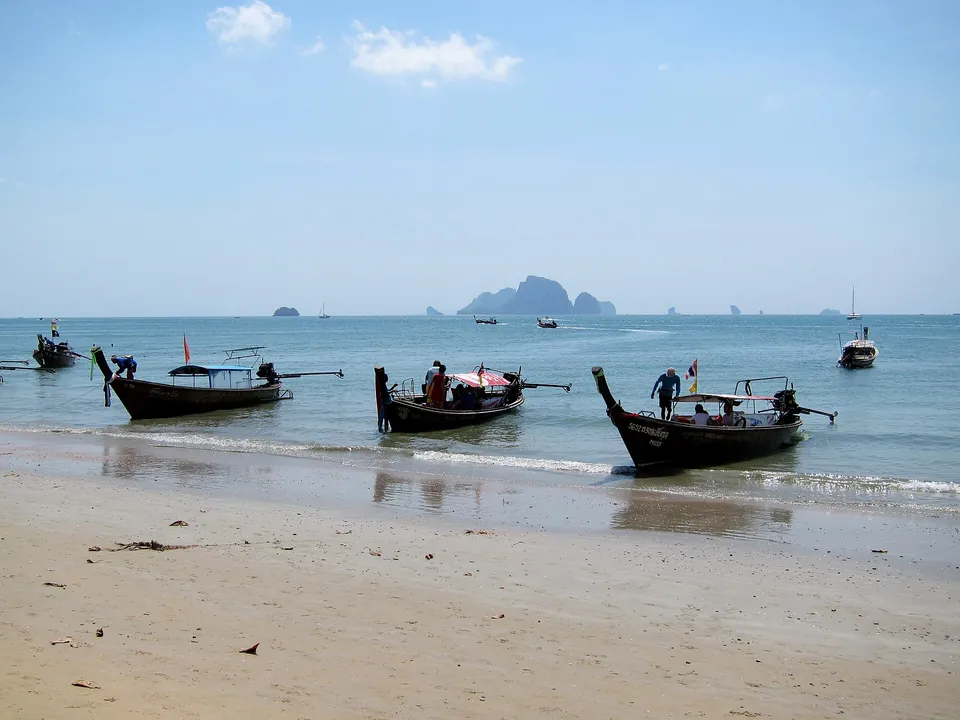
- Longtail boats on Ao Nang beach with limestone islands on the horizon. Photo: Jukka from HELSINKI, CC BY 2.0, source: Wikimedia Commons. Edited: resized, saved as WebP, cropped for the page.