Weather in Phuket, Krabi and Phang Nga: when to go
Phuket, Krabi and Phang Nga lie on the Andaman Sea, so the weather of the west coast is what matters. See which months tend to be drier, when the monsoon arrives and why, for boat trips and national parks, you need to check the specific date.
The most reliably dry period on this side of Thailand is roughly December to March. From May to October the southwest monsoon arrives, bringing more rain and rougher seas, so boat tours are changed or cancelled more often. Phuket, Krabi and Khao Lak all lie on the Andaman Sea, so follow the weather for the west coast, not for Koh Samui.
Why "weather in Thailand" isn't enough
Thailand has two coasts, and each has its own rhythm. Phuket, Krabi and Phang Nga are in the west, on the Andaman Sea. The islands in the Gulf of Thailand, such as Koh Samui, have their wetter season at a different time. If you look at a general table for "Thailand" or a forecast for Samui, you may choose your dates based on the wrong coast.
The Thai Meteorological Department (TMD) and the Tourism Authority (TAT) both describe how the southwest monsoon brings more rain and tougher conditions at sea to the west coast. The start and end of the season shift a little every year. A seasonal overview will therefore help you choose a month, but it won't tell you what the weather will be on a particular day.
The year month by month
December to February. Typically the drier part of the year. For island tours it's the most predictable period, but even then the sea conditions on the day decide whether a boat goes. December and January are also when ferries and accommodation on the islands fill up quickly, so it's a good idea to book earlier.
March. Still suitable for beaches and islands. Expect high heat and plan a break in the shade or by the pool over lunch.
April. A transitional month. Storms become more frequent and the sea may be rougher. Leave a freer day in your plan so a tour can be moved.
May to August. The monsoon season. This doesn't mean rain all day every day, but you need to expect showers, waves and changes to boat programmes. The Similan and Surin Islands close during this period, in 2026 from mid-May to mid-October. Plan more loosely and keep a mainland programme to hand.
September and October. According to long-term averages, the rainiest months of the year. Warnings may be in force at sea and some marine areas are closed. If you're travelling at this time, treat island tours as a bonus, not a fixed point in the programme.
November. The transition to the drier season isn't always even. In October 2026 the tourism authority warned that October and early November may still be rainy, and that boat operators postpone departures when waves are high. Sunshine and a calm sea can't be promised.
What the long-term averages show
For each area we chose a representative TMD station and its normals for 1991–2020 (for Krabi 1994–2020). These are climate averages, not a forecast.
- Phuket (the Phuket station on the east side of the island): February is the driest, and the most rain falls in September and October.
- Krabi (the Krabi station near Krabi town): February is also the driest, October the rainiest.
- Phang Nga (the Takua Pa station, north of Khao Lak): the same rhythm, but markedly more rainfall in the monsoon than in Phuket or Krabi. For Khao Lak, take this station as the nearest official figure, not as an exact measurement at your hotel.
Temperature changes little over the year. What matters is rain, waves and whether the park you want to visit is open. You'll find a monthly overview with exact values, the station and the averaging period in the table on this page.
| Month | Phuket | Krabi | Takua Pa (Phang Nga) |
|---|---|---|---|
| January | 33.0 °C · 50 mm · 5.6 days | 32.6 °C · 97 mm · 7.7 days | 32.6 °C · 62 mm · 6.3 days |
| February | 34.0 °C · 24 mm · 3.4 days | 34.1 °C · 36 mm · 4.3 days | 33.2 °C · 45 mm · 5.6 days |
| March | 34.4 °C · 81 mm · 7.5 days | 34.7 °C · 108 mm · 8.3 days | 33.6 °C · 145 mm · 10.4 days |
| April | 34.2 °C · 135 mm · 11.7 days | 34.3 °C · 142 mm · 12.7 days | 33.7 °C · 222 mm · 15.6 days |
| May | 33.2 °C · 237 mm · 18.9 days | 33.0 °C · 210 mm · 17.5 days | 32.6 °C · 431 mm · 22.4 days |
| June | 32.6 °C · 249 mm · 18.6 days | 31.9 °C · 225 mm · 17.5 days | 31.9 °C · 457 mm · 21.1 days |
| July | 32.3 °C · 240 mm · 19.1 days | 31.6 °C · 222 mm · 17.6 days | 31.5 °C · 466 mm · 22.3 days |
| August | 32.2 °C · 309 mm · 19.5 days | 31.5 °C · 273 mm · 18.2 days | 31.3 °C · 570 mm · 22.7 days |
| September | 31.8 °C · 350 mm · 21.7 days | 31.3 °C · 286 mm · 19.2 days | 30.9 °C · 636 mm · 24.1 days |
| October | 31.8 °C · 336 mm · 22.7 days | 31.4 °C · 293 mm · 20.6 days | 31.1 °C · 529 mm · 24.1 days |
| November | 32.1 °C · 178 mm · 15.9 days | 31.4 °C · 199 mm · 17.5 days | 31.8 °C · 232 mm · 16.8 days |
| December | 32.1 °C · 82 mm · 10.3 days | 31.5 °C · 90 mm · 11.1 days | 31.9 °C · 78 mm · 9.0 days |
Average daily maximum temperature · average monthly rainfall total · average number of days with rainfall of at least 0.1 mm. Source: Thai Meteorological Department (TMD), long-term normals 1991–2020, 1994–2020. This source doesn't give sunshine hours or sea temperature.
National parks have their own calendar
Several popular destinations lie in marine national parks. Every year these close some places, especially during the rainy season, for safety and for nature to recover. The exact dates are set anew each year.
- The Similan and Surin Islands were closed in 2026 from mid-May to mid-October, and the Similans opened on 15 October 2026.
- Maya Bay on Phi Phi was closed in August and September in 2026 and opened on 1 October.
These dates apply to 2026. For the next season, check the dates in an announcement from the Department of National Parks (DNP) or with the specific tour. Since October 2025, six marine national parks, including the Similans, Surin, Phi Phi and Phang Nga Bay, have used electronic tickets, so keep your passport with you on the tour.
How to build your plan around the weather
- Don't schedule island tours for your last day. If a trip is moved, you need a spare day. Keep the programme on the mainland before your flight.
- Keep a day without a boat in reserve. In Phuket, for example, a cooking class with a market visit or a tasting walk through the Old Town; in Krabi, a cooking class in Ao Nang. These programmes also have outdoor parts, such as the market, so they aren't fully covered.
- Ordinary rain isn't a warning. A short shower won't stop an ordinary day. But if the authorities or the operator issue a warning for the sea or a storm, respect it and stay off the water and exposed places.
- The operator decides about the boat trip. It decides on the route, the order of stops or cancellation according to the day's conditions. The rules for changes and refunds differ for each offer, and you'll find them when you book.
Where to follow the current situation
- Forecast for the west coast: Thai Meteorological Department, Southern West Coast region. For every bulletin, check the issue date in the text itself.
- National parks: the Department of National Parks (DNP) page and TAT announcements.
- A specific tour: the terms and any changes for the chosen option on GetYourGuide.
If you're still deciding where to stay, also see the comparison of Phuket, Krabi and Khao Lak and the transport guide.
More topics in the guide
Visas and entry to Thailand: what to check before you arrive
You can travel to Thailand as a tourist with a Slovak passport without a visa, but from 15 September 2026 for a maximum of 30 days. See what applies to your passport, the TDAC arrival card and longer stays, and where to…
Transport and transfers: airports, travel between areas and boats
Phuket airport and Krabi airport are two different airports, and you can't reach Railay or Phi Phi by car all the way to your hotel. This overview shows how to get from…
GuideMoney and budget: baht, cash, cards and what goes into the price of a tour
In Thailand you pay in baht, and with tours it's worth watching more than just the lowest price. We explain when cash comes in handy, why the park fee isn't always included in the price and how to compare offers priced…
GuideWhere to stay: Phuket, Ao Nang, Railay or Khao Lak
Where you stay affects which tours are nearby, whether hotel pickup is available and how long you’ll spend in the car. We compare parts of Phuket, Krabi and Phang Nga and advise when one base is enough and when two are…
GuideBefore you travel to Thailand: documents, health, electricity, etiquette and emergency numbers
A short list of things to sort out before you fly to Phuket or Krabi: documents, insurance, an adapter, clothes for temples, behaviour in national parks and numbers to save on your phone.
Photos and sources
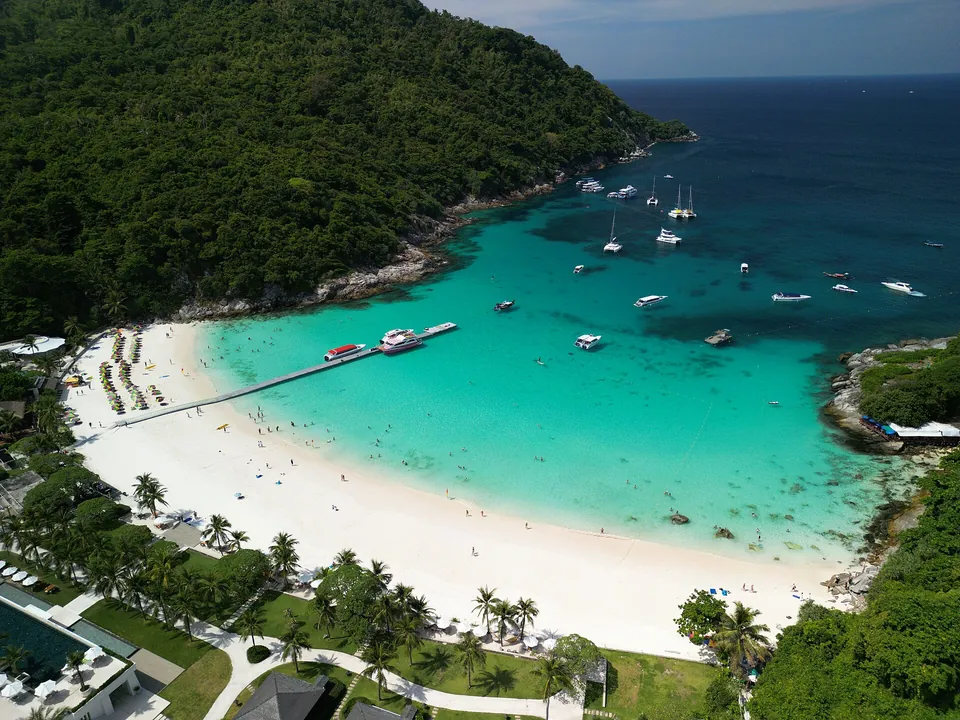
- A white beach and turquoise bay with anchored boats on Racha Yai. Photo: ELPHUKET, CC BY-SA 4.0, source: Wikimedia Commons. Edited: resized, saved as WebP, cropped for the page. The edited photo is under the same licence, CC BY-SA 4.0.
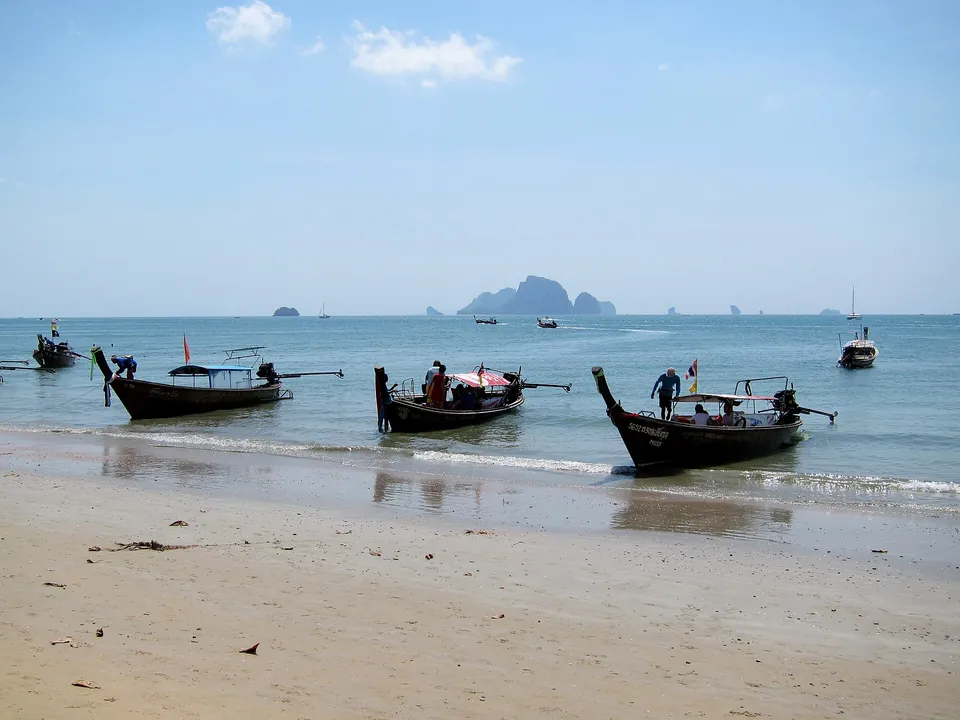
- Longtail boats on Ao Nang beach with limestone islands on the horizon. Photo: Jukka from HELSINKI, CC BY 2.0, source: Wikimedia Commons. Edited: resized, saved as WebP, cropped for the page.