Before you travel to Thailand: documents, health, electricity, etiquette and emergency numbers
A short list of things to sort out before you fly to Phuket or Krabi: documents, insurance, an adapter, clothes for temples, behaviour in national parks and numbers to save on your phone.
Before you fly, check your passport and the entry rules for your citizenship, fill in the TDAC arrival card and take out travel insurance that also covers the activities you plan to do. Pack a socket adapter, clothing that covers shoulders and knees for temples, and save the Thai emergency numbers on your phone. The tourist police line is 1155.
Documents
- Passport with sufficient validity, for every traveller including children. You'll find details in the guide Visas and entry.
- TDAC, the digital arrival card. Complete it online from three days before your arrival date in Thailand and submit it before you enter the country.
- Confirmation of accommodation and onward travel. They may want to see it at the border.
- Copies of documents. Photograph your passport, insurance policy and bookings and store them somewhere other than your phone too.
- Driving licence: check in advance if you plan to drive. For quad bikes and similar activities, the rules of the specific option apply, not a general assumption.
If you lose your passport, contact the police and the Embassy of the Slovak Republic in Bangkok.
Insurance and health
Take out travel insurance with medical expenses abroad. Check whether it also covers the activities you want to try, such as diving, climbing, quad biking or riding a motorbike. For tours, the operator's rules also apply. Many boat tours explicitly advise against participation for pregnant women, people with back or heart problems, or young children below a certain age.
Talk to a doctor or a travel medicine clinic about vaccinations and medication. This guide is not a substitute for medical advice. Bring any medication you take regularly in its original packaging, ideally with a doctor's note. If you take medication with strong active ingredients, check the rules for bringing it in with a Thai diplomatic mission.
Practical things that will make your day easier on the spot:
- Water. The Tourism Authority of Thailand recommends drinking bottled water.
- Sun and heat. Wear a hat and plan breaks during the hottest part of the day.
- Sea. On boat tours in rough seas you may feel seasick. If you're prone to it, prepare in advance.
- Diving and flying. Confirm the gap between a dive and a flight with the dive centre for your specific programme.
Electricity and internet
In Thailand the voltage is 220 V and the frequency 50 Hz. Sockets are often for flat two-pin plugs as well as round ones, and earthed three-hole sockets are less common. A universal adapter is therefore worth having.
Mobile signal covers tourist areas. Before you travel, find out from your operator the cost of roaming outside the EU. On the spot you can buy a Thai SIM card or an eSIM. You'll also need the internet for tour confirmations, which operators often send by email or WhatsApp the day before.
Clothing and behaviour in temples
Dress modestly for temples. The official government portal recommends long sleeves, trousers or a skirt to the knee, and advises against tank tops, short T-shirts and tight or revealing clothing. You take off your shoes before entering buildings.
Other rules worth knowing:
- Don't photograph people while they're praying, and don't take selfies with a Buddha statue.
- Don't sit with your feet pointing towards a Buddha or monks.
- Don't step on the threshold when entering a shrine.
- Don't point at anything with your finger; use your whole hand.
For an inland Krabi tour with a stop at Tiger Cave Temple, take clothing that covers your shoulders and knees.
Respect for nature
The Andaman Sea and its national parks are protected. The Tourism Authority recommends reef-safe sunscreen and not touching corals. Other principles:
- Swimming is not allowed in Maya Bay, and drones may not be used there without permission.
- Don't feed monkeys, even when you see them near temples or on beaches.
- With elephants, choose programmes built around observation. All three observation programmes in our selection are without elephant riding.
- Don't catch or stroke sea turtles or other animals.
- Since October 2025, electronic tickets have been used in marine national parks; keep your passport with you.
Local transport and safety
- With taxis and private transport, agree on a price or use an official way of ordering in advance.
- Wear your seat belt in a car.
- If you rent a scooter or quad bike, check the insurance and your licence to drive. Don't ride without them.
- Accommodation providers usually report their guests' stay to the authorities. With private accommodation, ask your host about this.
Emergency numbers in Thailand
Save them on your phone before you fly:
- 191 – police, general emergency line
- 1669 – emergency medical service
- 199 – fire brigade
- 1155 – tourist police, around the clock and with help in foreign languages
- 1672 – TAT tourism authority information line
Also note down the contact for the Embassy of the Slovak Republic in Bangkok and for your insurer. If you have difficulties on a tour, also contact the operator; you'll find their contact in your booking confirmation.
What else to pack
- Light clothing and one layer that covers your shoulders and knees.
- Water shoes and sturdy closed shoes, for example for ziplining or climbing.
- A rain poncho or a light rain jacket.
- A waterproof phone pouch for boat trips.
- A socket adapter.
You'll find when it's worth travelling and what to do when it rains in the guide Weather and when to go.
More topics in the guide
Weather in Phuket, Krabi and Phang Nga: when to go
Phuket, Krabi and Phang Nga lie on the Andaman Sea, so the weather of the west coast is what matters. See which months tend to be drier, when the monsoon arrives and…
GuideVisas and entry to Thailand: what to check before you arrive
You can travel to Thailand as a tourist with a Slovak passport without a visa, but from 15 September 2026 for a maximum of 30 days. See what applies to your passport, the TDAC arrival card and longer stays, and where to…
Transport and transfers: airports, travel between areas and boats
Phuket airport and Krabi airport are two different airports, and you can't reach Railay or Phi Phi by car all the way to your hotel. This overview shows how to get from…
GuideMoney and budget: baht, cash, cards and what goes into the price of a tour
In Thailand you pay in baht, and with tours it's worth watching more than just the lowest price. We explain when cash comes in handy, why the park fee isn't always included in the price and how to compare offers priced…
GuideWhere to stay: Phuket, Ao Nang, Railay or Khao Lak
Where you stay affects which tours are nearby, whether hotel pickup is available and how long you’ll spend in the car. We compare parts of Phuket, Krabi and Phang Nga and advise when one base is enough and when two are…
Photos and sources
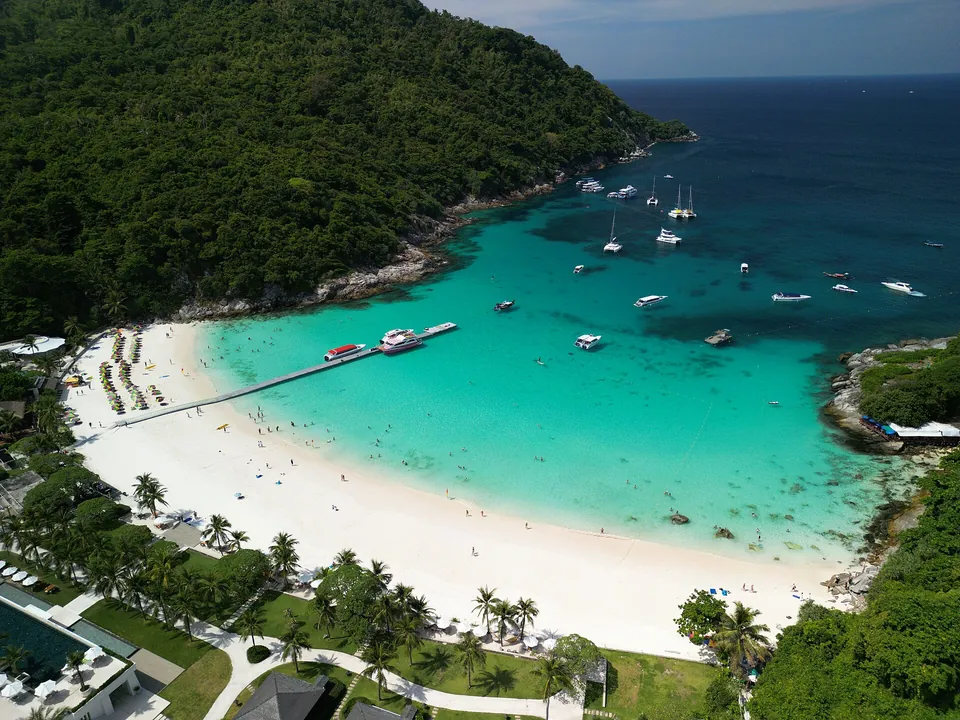
- A white beach and turquoise bay with anchored boats on Racha Yai. Photo: ELPHUKET, CC BY-SA 4.0, source: Wikimedia Commons. Edited: resized, saved as WebP, cropped for the page. The edited photo is under the same licence, CC BY-SA 4.0.
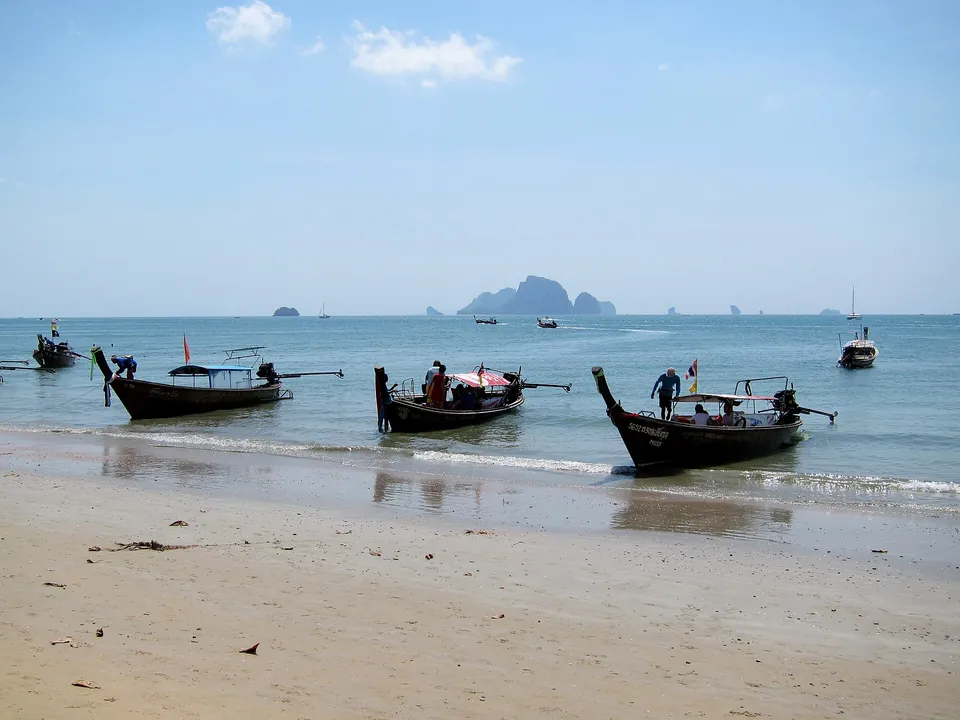
- Longtail boats on Ao Nang beach with limestone islands on the horizon. Photo: Jukka from HELSINKI, CC BY 2.0, source: Wikimedia Commons. Edited: resized, saved as WebP, cropped for the page.